 Five Cent
At-home IPL: what maker warnings and dermatologists say

Short answer: the makers of at-home IPL devices agree on more than their marketing suggests. Their manuals limit use to fair through medium-brown skin and naturally dark hair, rule out tattoos, moles and the eye area, set waiting periods after sun exposure, and list medical conditions that call for a doctor first. The American Academy of Dermatology (AAD) advises seeing a dermatologist before using an at-home laser. This note reads Braun's and Philips' safety material, the AAD and the FDA database, all checked October 17, 2026. It is not medical advice.
Start with the color chart, because the physics decides who can use IPL
IPL works by heating pigment in the hair. That makes skin tone and hair color the first filter, not a footnote. Every maker we read puts a chart near the front of its material.
Philips' manual for the Lumea IPL 7000, 8000 and 9000 Series limits use to adults aged 18 to 65 with fair to medium brown skin and naturally dark blond, brown, dark brown or black hair. It says dark brown and darker skin absorbs light more easily, which could cause pain, redness or burns.
Braun's US safety page says IPL can usually be used on fair to medium-brown tones with hair from natural blonde to dark brown or black. The Braun Silk-expert Pro 5 adds a sensor that reads skin tone and blocks flashes outside its range.
Light hair is the other limit. Philips says light blond, grey, red and white hair do not absorb enough light. The AAD says laser hair removal will not work on blonde, white, gray or red hair.
Read the contraindications as a list of reasons to call a doctor first
The Philips Lumea manual is the most complete list we read. It says not to use the device, or to consult a doctor first, in these situations, among others:
- Pregnancy, lactation or breastfeeding
- Chemotherapy or radiation therapy in the last three months
- Reduced pain sensitivity from medication, such as numbing cream, or from a medical condition
- Light sensitivity, including a sun allergy or medication or herbal remedies that increase sun sensitivity
- Epilepsy with flashlight sensitivity
- Active skin cancer or a history of skin cancer, or a pigmentation disorder such as vitiligo
- A history of poor wound healing, an immunocompromised state, or keloid scarring
- Use directly over or near an active implant such as a pacemaker, neurostimulator or insulin pump
Braun's US safety page is shorter. It does not address pregnancy, photosensitizing medication or keloids. That does not make those risks irrelevant to a Braun device; it means the manual in the box, and a clinician, have to fill the gap.
Keep the flash away from the eyes, tattoos and dark spots
Both makers exclude areas where skin is darker or thinner. Philips names the lips, nostrils, ears, scalp, nipples, genitals and the area around the anus. Braun's US page names the genitals, nipples and anus.
Darker marks are the next exclusion. Philips says not to flash moles, warts, large freckles, birthmarks, age spots, dark veins, tattoos or permanent makeup. Braun's UK product page, as read for our review, lists tattoos, permanent makeup, dark spots, birthmarks, moles, warts and dermal fillers.
Eyes get their own rules. Philips says to use Lumea only below the cheekbones, never on or near the eye, eyelid or eyebrow, and in a well-lit room. Both makers say their sensors or filters mean no goggles are needed; that claim depends on following the area rules.
Treat sun exposure as a scheduling problem
Tanned skin holds more pigment, so the makers build in waiting periods. Philips says not to start or resume treatment within four weeks of unprotected sun or a tanning bed, or two weeks after artificial tanning products.
Sun protection continues during treatment. Philips asks for SPF 50 or higher on treated areas, especially in the first 48 hours. Braun's page says at least SPF 30. The two figures differ; follow the manual for the device you own.
The AAD gives the same direction for clinic treatment: if you have a tan, wait for it to fade completely before laser hair removal.
Know the side effects the manuals print
Philips publishes a clinical study summary in its manual: 94 women aged 18 to 64. Of those, 31 had one or more mild and transient side effects, most often pain (26), itchiness (8) and redness (5). This is the maker's own study.
The manual's uncommon side effects are more serious: burns and blisters, pigment changes lasting several weeks and in rare cases up to a year, folliculitis, infection, scarring and herpes outbreaks in people who carry the virus.
One warning surprises many readers. Philips says IPL can cause increased hair growth in some people, most often on women's jawline and neck and men's upper back and shoulders, and names women of Mediterranean, Middle Eastern and South Asian heritage as the highest-risk groups.
The AAD's laser FAQ lists burns, permanent changes in skin color and scars as possible effects of clinic laser treatment in inexperienced hands. Home devices are lower powered, but the same kinds of injury are what the manuals guard against.
Read FDA cleared as a starting point, not a verdict
The FDA classifies over-the-counter light-based hair removal under product code OHT, regulation 21 CFR 878.4810, as a Class II device. Its definition: an over-the-counter device that uses thermal energy to kill hair follicles.
Clearance is device-specific and checkable. Braun's Silk-expert Pro 5 carries 510(k) K190354, decided March 18, 2019. The cleared indication is permanent reduction in regrowth, measured 6, 9 and 12 months after treatment, not permanent removal.
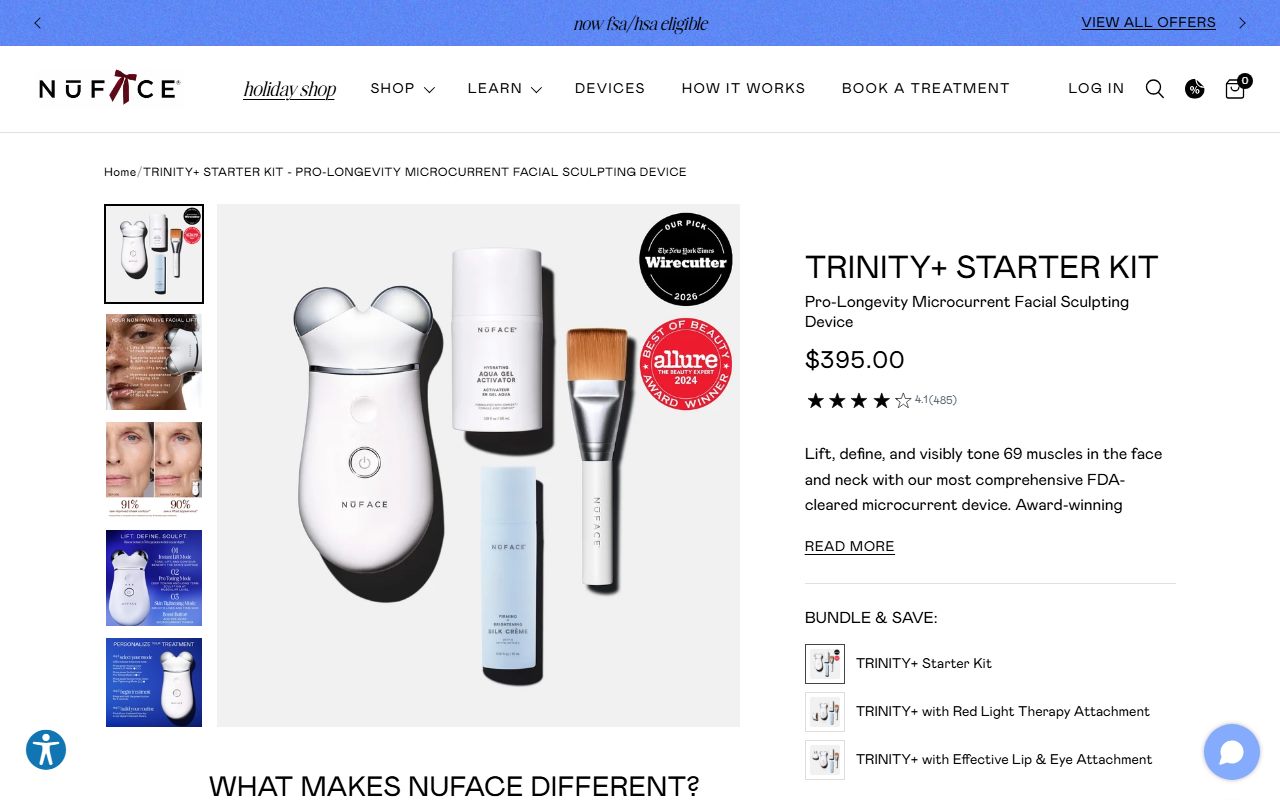
A 510(k) decision means substantial equivalence to a device already on the market. It is not proof that a product works as advertised. The same logic applies to the NuFACE Trinity+, a cleared microcurrent device in a different category.
If something goes wrong, the FDA's MedWatch program accepts reports of problems with medical devices. The FDA consumer update on removing hair safely, long cited on this topic, returned a not-found page when we checked on October 17, 2026.
Expect reduction and upkeep, not a one-time fix
The AAD says at-home laser devices need to be used for a lot longer to see results and periodically to maintain them. Its clinic figures are 2 to 6 treatments for most patients, with a 10 to 25 percent reduction after the first.
Philips' own study reports up to 93.1 percent hair reduction on legs and about 61 percent on the upper lip, armpits and bikini line after four treatments two weeks apart. Those are maximums from the maker's study, not averages.
The schedule also varies by maker. Philips says never more often than once every two weeks. Braun's US page says weekly while its UK page says every two weeks, a gap our Silk-expert Pro 5 review flags.
Bottom line
- Check the chart first. If your skin is darker than fair to medium brown, or your hair is red, grey, white or very blonde, IPL is the wrong tool.
- Read the full contraindication list in the manual, not the marketing page, and take it to a clinician if any line comes close.
- Look up the 510(k) number and read the cleared indication: reduction, not removal.
- Plan around the sun: waiting periods before, SPF during.
- Stop and see a doctor for burns, blisters, lasting color changes or new hair growth in treated areas.
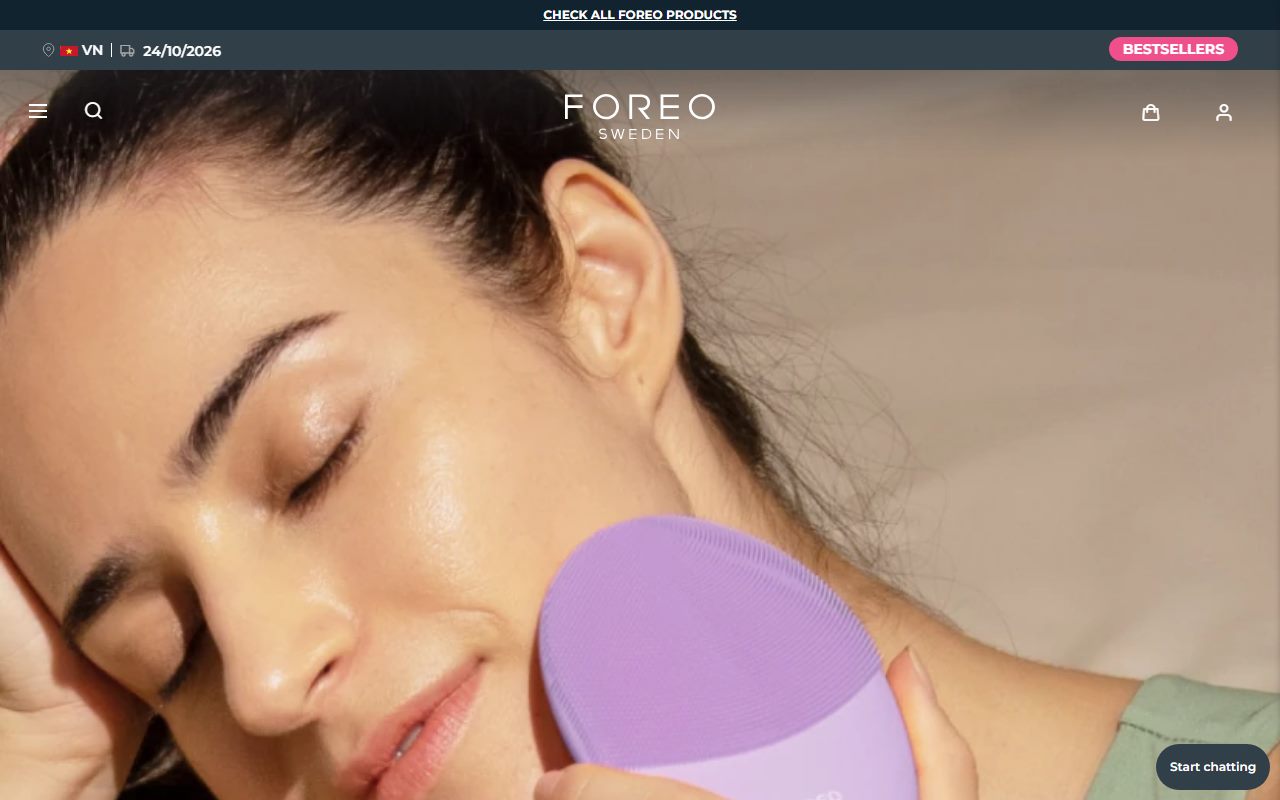
Our best at-home skin and hair-removal devices guide ranks the IPL alongside the FOREO LUNA 4 and the Trinity+, and the LUNA 4 vs Trinity+ comparison covers the face devices. For grooming beyond the skin, see the best electric shavers.
Sources
- Philips Lumea IPL Hair Removal 7000, 8000, 9000 user manual (intended use, contraindications, warnings, clinical study, side effects) - checked October 17, 2026
- Philips US product page, Lumea IPL 9000 Series BRI984/03 - checked October 17, 2026
- Braun US, IPL Hair Removal Safety - checked October 17, 2026
- Braun UK product page, Silk-expert Pro 5 range - checked October 17, 2026
- American Academy of Dermatology, 6 ways to remove unwanted hair (last updated September 7, 2023) - checked October 17, 2026
- American Academy of Dermatology, Laser hair removal: FAQs - checked October 17, 2026
- FDA product classification OHT, light based over-the-counter hair removal - checked October 17, 2026
- FDA 510(k) K190354, BRAUN Silk.expert Pro 5 - checked October 17, 2026
- FDA MedWatch safety information and adverse event reporting program - checked October 17, 2026